
Beaches
Blowing Rocks Preserve

Jupiter Island, Hobe Sound

9 am to 4.30 pm

$5 per person
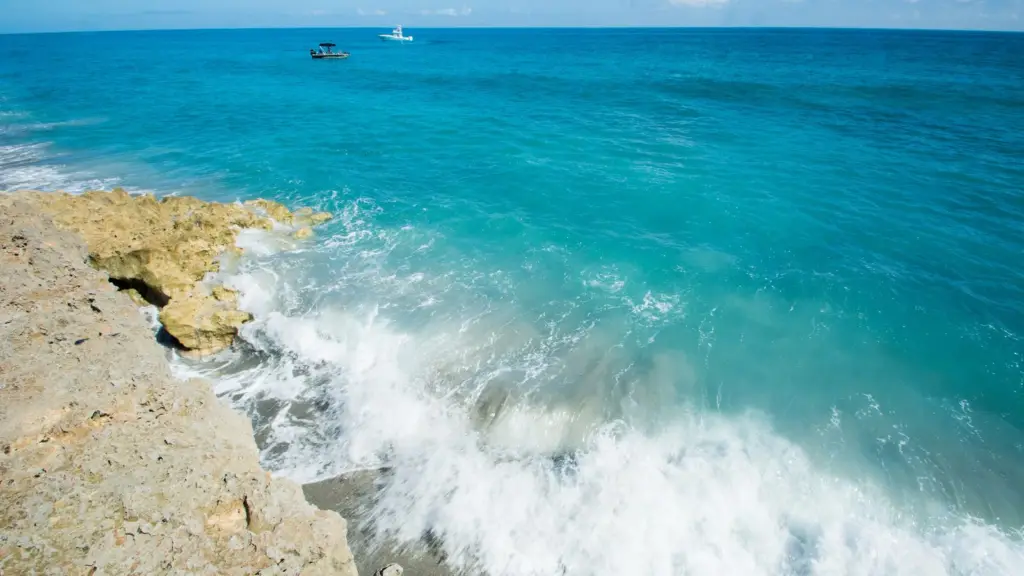
A mile of Jupiter Island’s shore is rock instead of sand, a shelf of Anastasia limestone full of holes and ledges that the sea has been carving since the shells it is made of were alive. At high tide with an onshore wind the waves drive into the holes and blow straight up, fifty feet on a good day, which is the show the preserve is named for and the reason to check the tide before you come.
At low tide it is a different place: pools in the rock full of urchins and small fish, a beach you can walk at the foot of the shelf and a long view down the island. The Nature Conservancy owns the preserve and has restored the dune and the lagoon side with native plants; a short trail crosses the road to a boardwalk on the Indian River and a small education centre.
The entrance is on South Beach Road, the island’s only road, with a small lot that fills fast on winter weekends when the surf is up. There are no lifeguards and swimming off the rocks is a bad idea; the beach north and south of the shelf is calmer.
Good to know
- High tide plus an east wind means the blow; low tide means the pools. Look up both before you come.
- The lot is small; arrive early on winter weekends after a front.
- Closed shoes on the rock. It is sharp and the holes are deep.
- No swimming off the shelf; use the beach beyond it.
- The lagoon-side trail and boardwalk are the quiet half of the visit.
The facts
Address
574 South Beach Road, Hobe Sound
Hours
9 am to 4.30 pm daily
Price
$5 per person, paid at the gate
Parking
Small lot at the entrance
Best for
High tide after a front; tide pools at low tide
$5 per person
Owned by The Nature Conservancy, which sets the hours and the fee.
Nearby
Within fifteen minutes are Hobe Sound Beach and the Jupiter Inlet Lighthouse.